What Are the Different Types of Abstract Art? A Complete Guide

Types of Abstract Art Explained: Geometric, Lyrical, Organic, Color Field, Minimalist & Mixed Media
Quick answer: Abstract art spans six main types — geometric (structured shapes and lines), lyrical (soft, free-flowing brushwork), organic (curved forms inspired by nature, also called biomorphic), color field (large expanses of flat, unbroken color), minimalist (reduced to essential forms with maximum restraint), and contemporary mixed media (built from unconventional materials beyond paint). Each uses color, form, and space differently, so the "right" one depends on whether you want a space to feel structured, calm, natural, immersive, quiet, or textural.
The 6 Types of Abstract Art at a Glance
| Type | Defined by | Best for | Featured artist |
|---|---|---|---|
| Geometric Abstract Art | Structured shapes, sharp lines, repeating patterns | Studies, offices, modern minimalist interiors | Sandesh Khule, Vivek Nimbolkar |
| Lyrical Abstract Art | Soft, free-flowing brushwork, intuitive color | Living rooms, meditative or calm spaces | Shrikant Kadam |
| Organic (Biomorphic) Abstract Art | Curved, wavy forms drawn from nature | Bedrooms, spaces wanting softness | Shubhra Das, Kishore Kumar |
| Color Field Abstract Art | Large, flat, unbroken fields of color | Statement walls wanting an immersive, contemplative mood | Mark Rothko (historical reference) |
| Minimalist Abstract Art | Reduced palette, restrained composition, negative space | Calm, uncluttered modern interiors | Madhuri Kathe |
| Contemporary & Mixed Media Abstract | Built from paper, gauze, foil — not just paint | Boardrooms, statement walls, luxury interiors | P Suresh Kumar, Madhuri Kathe |
What Is Geometric Abstract Art?
Geometric abstraction builds its imagery from structured shapes, sharp lines, and repeating patterns rather than gesture or emotion. It's often the style people picture first when they hear "abstract art" — precise, architectural, and highly controlled.
No conversation about Indian abstract art starts anywhere but with S.H. Raza, widely credited with the most globally recognized body of geometrical abstract art among India's Modern masters. His Bindu series — built around a single radiating point symbolising energy and origin — remains a reference point for nearly every Indian abstract artist working today.
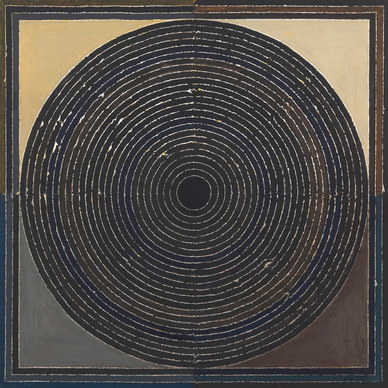
Artwork above is titled Kundalini by S.H. Raza, featured as part of Saffron Art auction.
Sandesh Khule shows how texture and linear symmetry add real energy to a space. His work weaves bold yet delicate textured lines into geometric patterns, often in fiery primary colors — well suited to a modern office or study.

View artwork: SK Textured Abstract 161 | View Artist collection: Sandesh Khule
Vivek Nimbolkar works across both lyrical and geometric abstraction, often translating nature's structures into carefully composed geometric forms. Featured here: a striking set of four works in grey, gold, and charcoal-black that reads as one cohesive statement when hung together.

View artwork: VN 31: Set of Four | View Artist collection: Vivek Nimbolkar
Shop the full geometrical asbtract art category on Artazzle: Geometrical Abstraction Paintings
What Is Lyrical Abstract Art?
Lyrical abstraction relies on soft, free-flowing brushwork, atmospheric space, and intuitive color mixing — closer to music than architecture.
Shrikant Kadam is a nature abstractionist whose work evolved from realism into abstraction, rooted in seasonal textures, light, and sound. In his own words: "Nature fuels my spontaneous palette... I reimagine nature's beauty, mystery, and secrets, portraying size, space, texture, and color uniquely on canvas." His candy and sorbet tones feel grounded and weightless at once.

View: SK Untitled 8 | View Artist collection: Shrikant Kadam
What Is Organic Abstract Art (Biomorphic Art)?
Organic abstract art form uses soft, curved, flowing shapes inspired directly by living forms — plants, bones, water, cellular structures — as a deliberate move away from strict geometry. It gained ground in the mid-20th century as artists turned to nature itself, rather than mathematics, for their reference point. It's also called biomorphic abstraction.
Defining characteristics:
- Rounded, wavy, curved lines rather than hard edges
- Patterns borrowed from plants, animals, and natural rock formations
- Natural flow prioritized over strict compositional rules
In India, Bimal Das Gupta (1917–1995) is remembered as one of the earliest pioneers of modern abstraction, experimenting with abstract forms in Delhi as far back as the 1940s. His earth-toned compositions drawing on the underwater world, the cosmos, and Tantric philosophy helped establish a distinctly Indian abstraction rather than a borrowed European one.
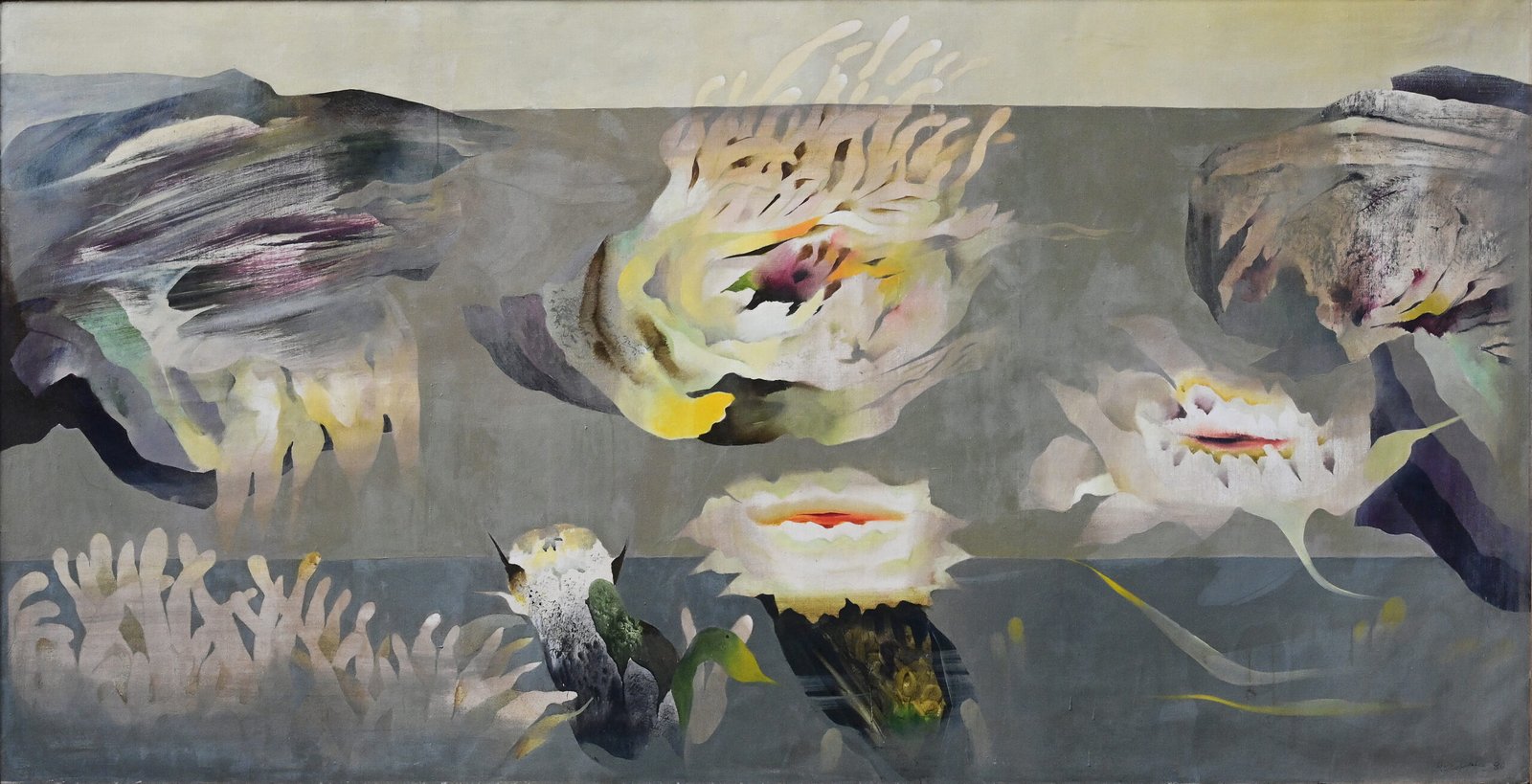 Featured above is organic artwork by Bimal Das Gupta. View Image Source: Click Link here.
Shubhra Das created organic abstract art in her gold toned abstract work — a luminescent, nature inspired composition.

View Shubhra Das artwork: Serenity II | View Artist collection: Shubhra Das
Kishore Kumar brings the same organic sensibility to this tranquil composition — nature's forms loosened into abstraction rather than rendered literally.

View artwork: Entangled Nature (Organic Abstract Nature Painting) | Artist collection: Kishore Kumar
Shop the full category: Lyrical & Organic Abstraction
What Is Color Field Abstract Art?
Color field abstract strips painting down to large, flat, unbroken expanses of color, with minimal gesture, texture, or brushwork visible on the surface. Rather than depicting form or movement, the color itself becomes the subject — the goal is an immersive, meditative experience where the viewer is absorbed into the field of color rather than reading a composition.
The style emerged in New York in the late 1940s and 1950s, pioneered by artists including Mark Rothko, Barnett Newman, and Clyfford Still. Mark Rothko in particular became known for soft-edged, luminous rectangles of color stacked and layered to evoke deep emotional and even spiritual responses — proof that color alone, without any figure or line, can carry the full weight of a painting.
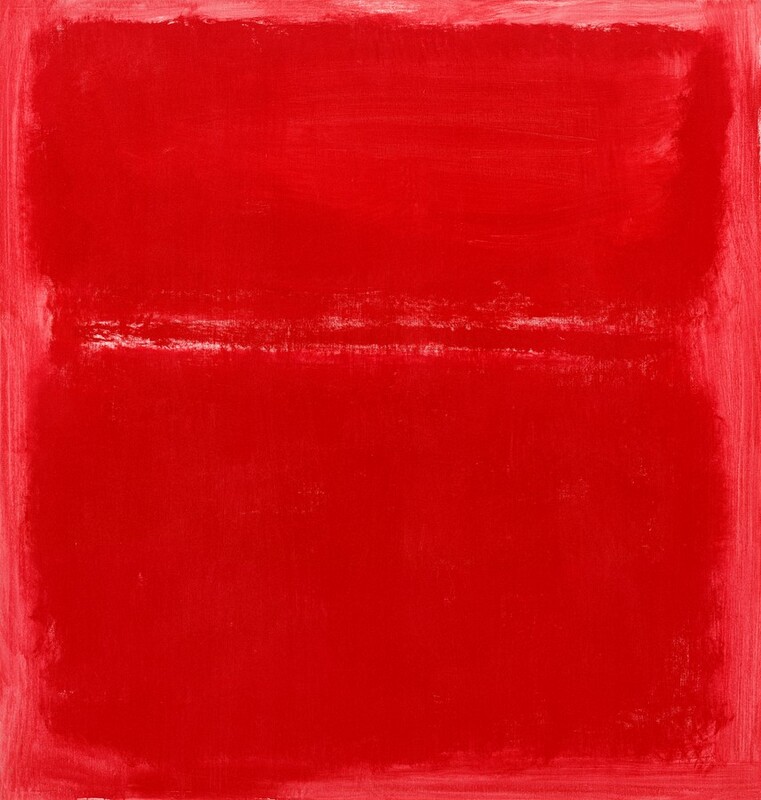
Defining characteristics:
- Large areas of flat, saturated color
- Minimal surface texture or visible brushwork
- A flat picture plane rather than illusions of depth
- An emphasis on emotional and contemplative response over narrative or form
What Is Minimalist Abstract Art?
Minimalist abstraction takes the opposite instinct from maximal, textural work — it reduces a composition to its essential elements: a restrained palette, simple forms, and generous negative space. The power of a minimalist piece comes from what's left out as much as what's included, making it a natural fit for calm, uncluttered modern interiors.
Madhuri Kathe, though best known for her richly textured mixed-media abstracts, also works in a quieter, minimalist register — pared-back compositions in soft, atmospheric tones that favor restraint and breathing room over density.

View Minimalistic Abstract Art: Illuminated Glacier | View artist colelction: Madhuri Kathe
What Is Contemporary & Mixed Media Abstract Art?
This category transcends existing abstract art categories and instead focuses on expermintations with new mediums — artists build texture and dimension using paper, gauze, metallic foils, and other unconventional materials that flat paint can't achieve alone.
P Suresh Kumar works with a luxury-leaning sensibility — layered paper strips in electric blues and golds, designed for boardrooms and executive offices that need real visual presence.

View artwork: Blue Cosmic Current | Artist collection: P Suresh Kumar
Shop the full category: Contemporary & Mixed Media Abstract Paintings
Frequently Asked Questions
What are the main types of abstract art? Geometric abstraction, lyrical abstraction, organic (biomorphic) abstraction, color field abstraction, minimalist abstraction, and contemporary mixed media abstract art. Each is defined by a different relationship to shape, color, and material.
What is the difference between geometric and organic abstraction? Geometric abstraction uses hard-edged shapes and repeating patterns; organic abstraction uses soft, curved, nature-inspired forms. One reads as structured and architectural, the other as flowing and natural.
What is color field painting? Color field painting uses large, flat, unbroken areas of color with minimal texture or brushwork, aiming for an immersive, contemplative effect. It was pioneered by artists like Mark Rothko, Barnett Newman, and Clyfford Still in the late 1940s and 1950s.
What is minimalist abstract art? Minimalist abstract art reduces a composition to its essential forms — a restrained color palette, simple shapes, and generous negative space — favoring quiet restraint over density or texture.
Who is the most famous Indian abstract artist? S.H. Raza is widely regarded as the most globally recognized Indian abstract artist, known for his Bindu series exploring energy and origin through a single radiating point.
Which type of abstract art suits a living room best? Lyrical, organic, or minimalist abstraction generally suit living rooms and bedrooms best, since their soft or restrained qualities create a calming atmosphere. Geometric, color field, and mixed media pieces tend to work better as bold statement pieces in offices or boardrooms.
What is biomorphic abstraction? Biomorphic abstraction is another name for organic abstraction — art built from soft, curved shapes inspired by living forms like plants, bones, and natural landscapes rather than by geometry or mathematics.
Explore the complete Abstract Art Paintings collection at Artazzle.


